
By Signe Hammer, PEN San Miguel Vice President & PEN America Member
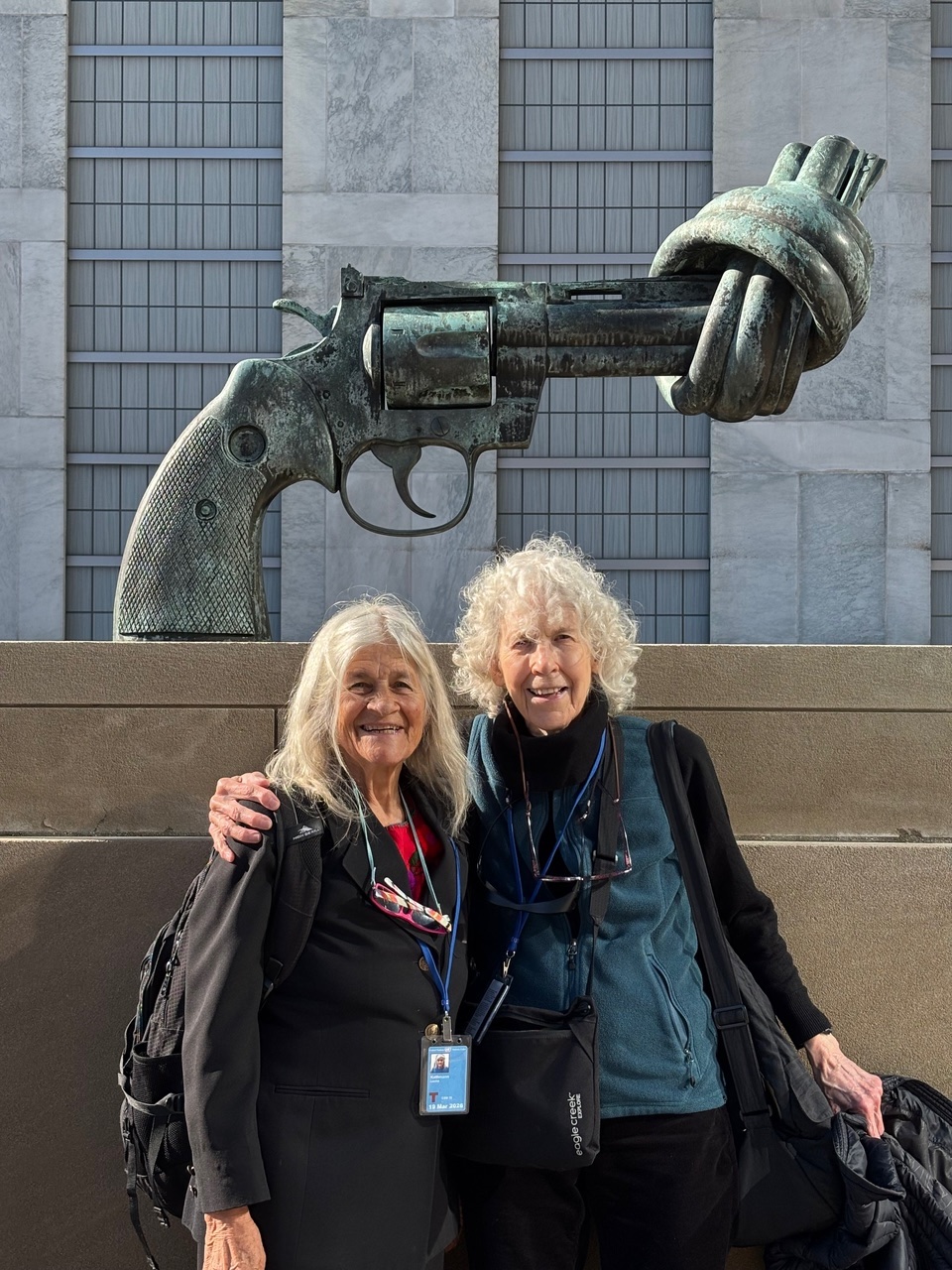
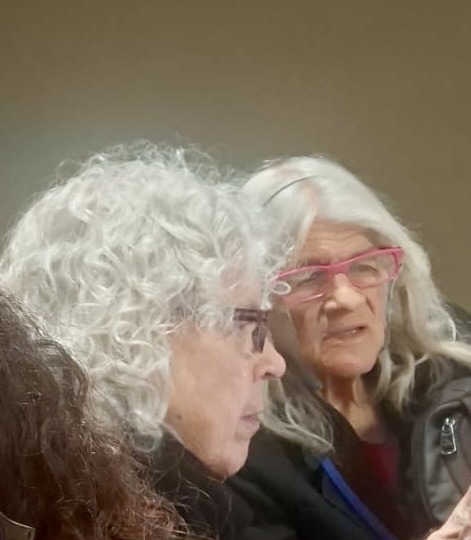
I attended the first week of UNCSW70 with Lucina Kathmann, PEN San Miguel Treasurer and International Vice President Emerita, PEN International. She’s a veteran, I was a newbie. Listening to even a tiny sampling of the dozens of panels and presentations was overwhelming: the contrast between Scandinavians talking confidently about fathers taking parental leave and indigenous women of the Americas just trying to be seen and heard, for instance. Yet, all women contend with the patriarchy in its many forms. What follows is both a report on what I observed and an attempt to make sense of it.
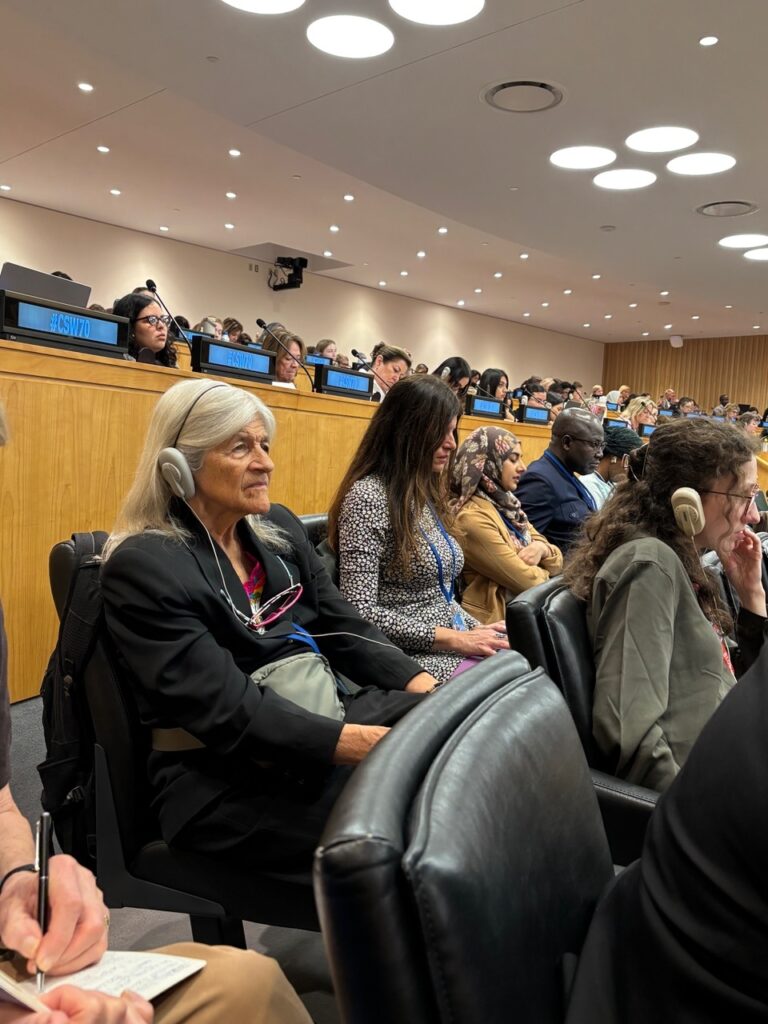
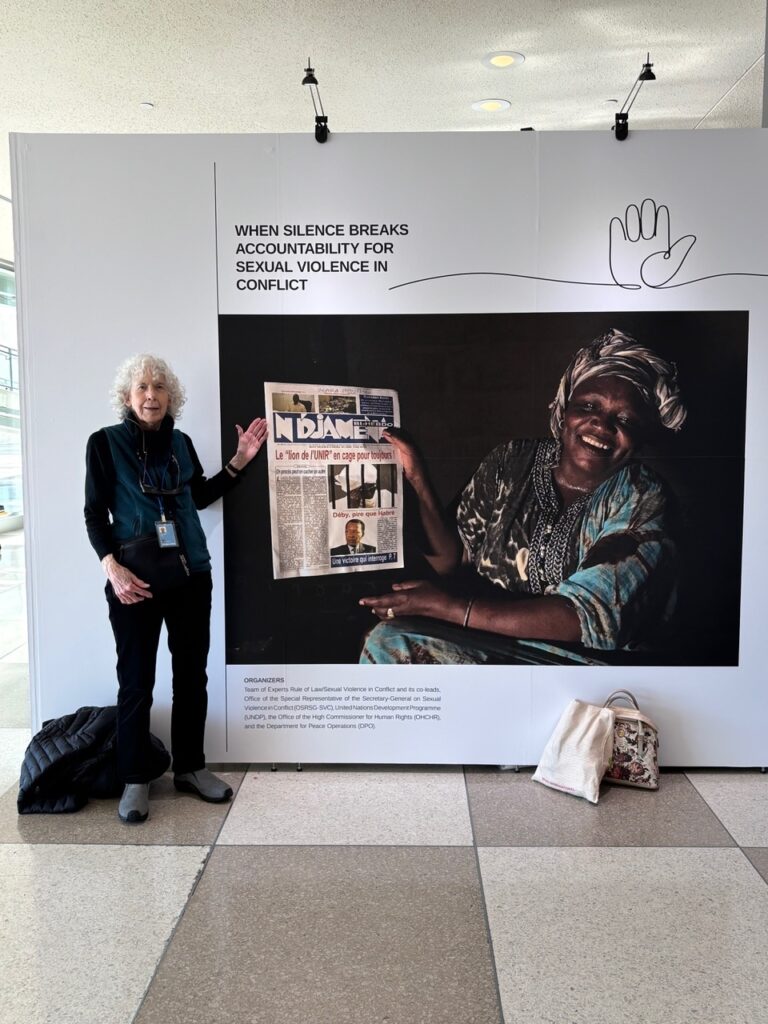
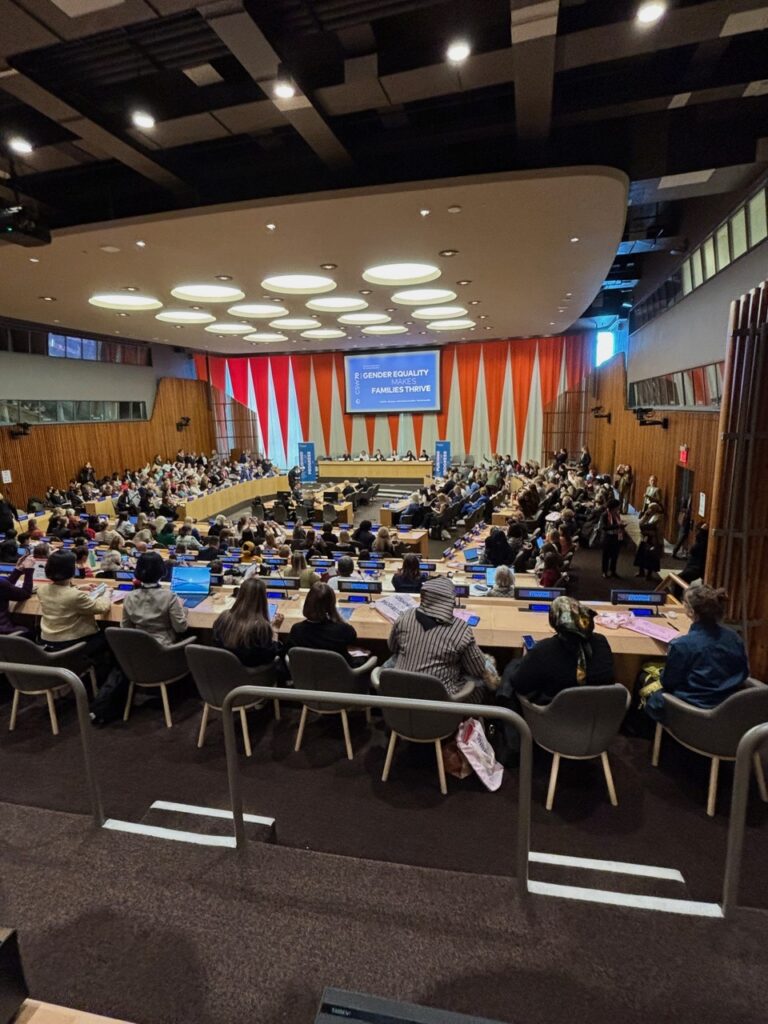
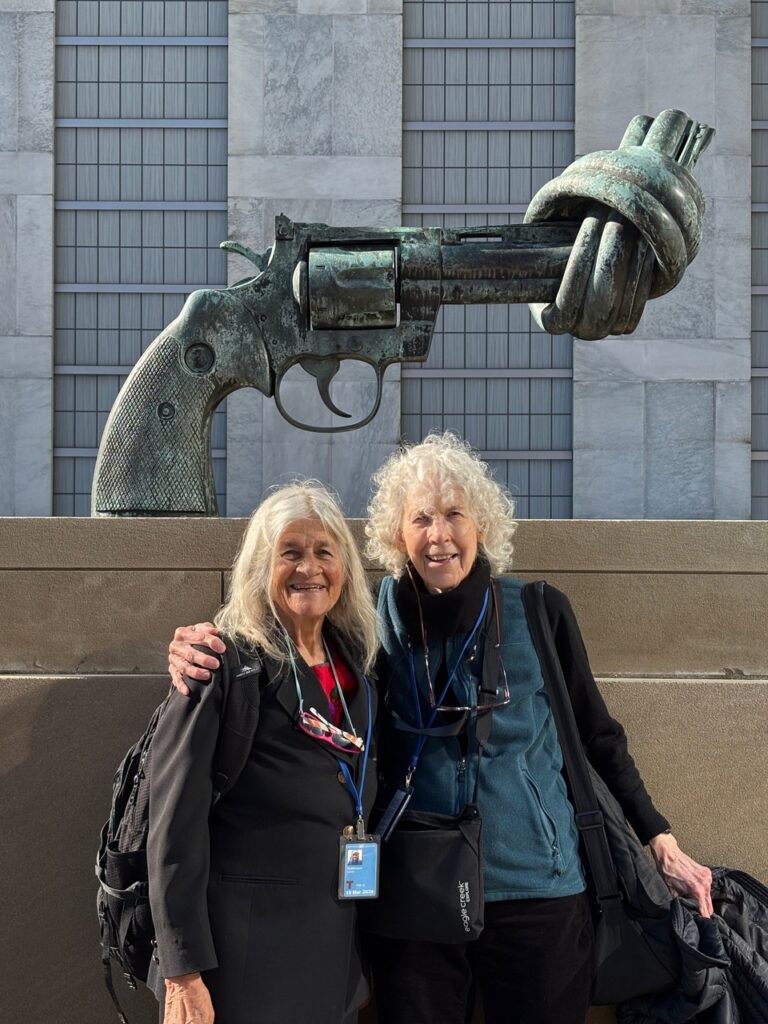
The session theme was, “Ensuring and strengthening access to justice for all women and girls.” This involves: Promoting inclusive, equitable legal systems. Ending discrimination. Taking on structural barriers. Also: Full participation in public life. Ending violence.
A tall order. Women know the obstacles: The patriarchy. Racial, ethnic, caste, class supremacy. A hostile dominant culture.
Nordic government ministers, making progress against patriarchy, pointed out that gender equality, far from a zero-sum game, strengthens and stabilizes both the family and the economy. With childcare, women contribute to both, while fathers taking parental leave embody new ways to be masculine. It takes government policies: as Norway’s Lubna Jaffery said, gender equality is about baking a bigger cake and giving a slice to everyone.
But there is backlash: The younger generation questions why the government needs to be involved. Gender polarization and anti-equality rhetoric are rampant online. Boys and young men are susceptible to the zero-sum thinking that leads to gender-based violence in-person and online.
So it’s not surprising that girls as young as nine are terribly vulnerable to online attacks—from exclusion, gossip and body shaming to sextortion, grooming, image abuse and AI deepfakes. In a panel on girls and cyberviolence, Mexico said it has reached a voluntary agreement with social media platforms to address the problem, while its eponymous Olimpia’s Law has had some success. Activist and cyberviolence survivor Olimpia Melo herself asked, “What will we tell the girls of the future—that we did not regulate patriarchy?” The virtual world is real, as are the consequences for girls.
Both online and off, attacks on gender equality and on individual women, especially those in political life, may also be coordinated and politically motivated. In “Protect Democracy, Defend Gender Equality,” all panelists agreed that, while gender equality is essential for real democracy, coordinated campaigns originating outside of countries and regions are working to undermine both by spreading false narratives—e.g., disseminating gender disinformation on social media and reframing gender equality as “gender ideology.” Undermining gender equality becomes, as Latvia’s Lauma Paegļkalna put it, a testing ground for undermining democracy and the rule of law.
The potential is frightening: Alain Berset, Council of Europe Secretary General, suggested that disinformation is being used to push women out of political life. Neil Datta, European Parliamentary Forum on Sexual and Reproductive Rights, suggested geopolitical reengineering as a motive—for example, extracting Latvia from the Council of Europe. But Latvia and the Nordic Council are standing firm, with active, engaged citizens and independent courts. NGOs like Profamilia (Colombia) and MARTA (Latvia) are important in detecting shifts in the narrative, earning women’s trust, and connecting through accurate language.
In addition to the patriarchy, aka male supremacy, millions of women around the world have had to contend with racial, ethnic, caste, or class supremacy and, often, a hostile dominant culture—what might be called dominant-culture supremacy. In the Western Hemisphere, and a handful of other countries such as Australia, racial and dominant-culture supremacy derived from a particular kind of colonialism that ended, not with the original inhabitants gaining independence from their colonial occupiers, but with the colonial settlers or their descendants winning independence from their own European mother countries. The original inhabitants (or those who survived displacement, replacement, marginalization and/or near-extirpation), remained colonized.
Franz Fanon famously wrote about the need for the formerly colonized to decolonize their minds. It appears that at least some Western Hemisphere and other governments are beginning to attempt to decolonialize their intentions and policies, although legal structures too often remain tangled in the past.
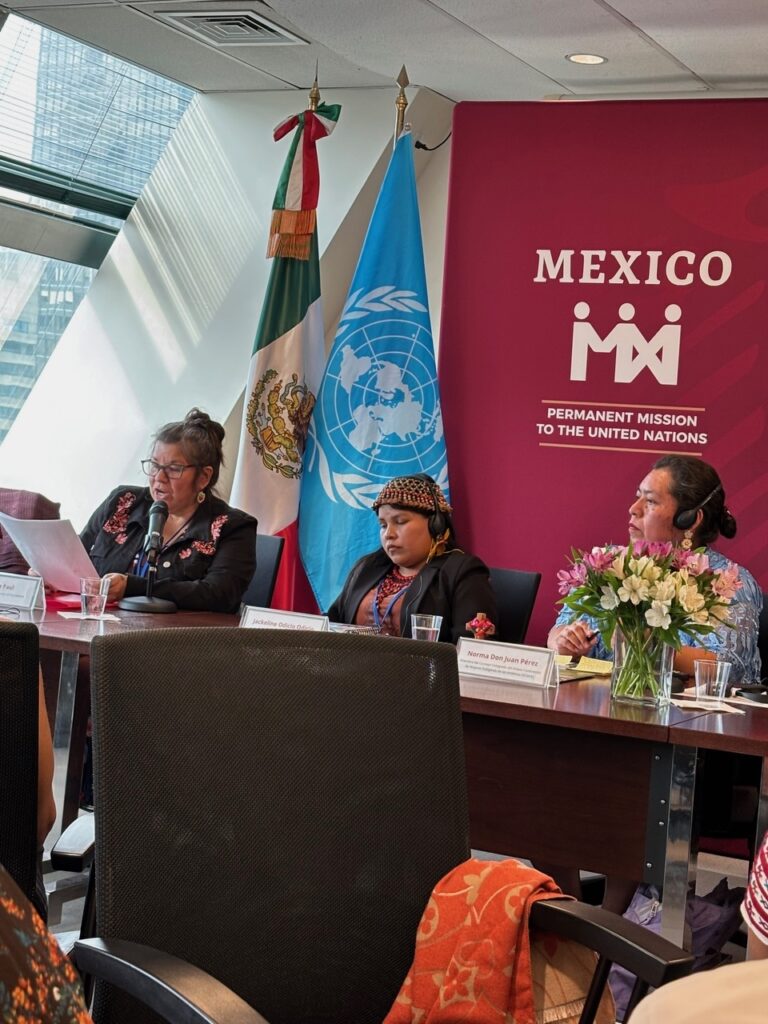
Mexico, which recognizes 68 indigenous languages, hosted “Access to Justice for Indigenous Women.” In its first panel, of government officials, Mexico declared a vision of local services to help integrate indigenous women into mainstream frameworks while respecting their traditions. Verónica de León Xovin de Guarcas, Presiding Judge of a Guatemalan court specializing in sentencing for crimes of femicide and sexual violence, said that neither interpreters nor judges know the local languages. She pointed out the need to listen to victims and provide access to reparations, healing and dignity. Australia and Canada cited patriarchy, racism, institutional exclusion and bias rooted in colonial practices: Aboriginal and Torres Straits women are Australia’s fastest-growing prison population. Canada has a strategy for culturally appropriate alternative courts, with the help of First Nations, Inuit and Native organizations,.
In the panel of indigenous organizations, both Jackeline Odicio, of Peru’s Kakataibo Women’s Federation, and Fátima Gamboa, Equis Justicia para las Mujeres (Mexico) cited the need for collective action at all levels to connect indigenous and national justice systems. Odicio: “We need alliances and international coalitions; we’re not strong enough alone.” Gamboa: “We need a functional vision of multiculturality. We don’t wish to be under the thumb of the national government.” Canada’s Assembly of First Nations Regional Chief Andrea Paul cited giant development projects whose worker camps generate violence, with too many indigenous women incarcerated. Indigenous women need to design community-based systems.
The good news is that indigenous women are organized and advocating for their own solutions, and were in the room to tell their own stories. The bad news is how wide a gulf seems to remain between their experiences and the results so far of national governments’ expressed awareness of problems and intentions to deal with them.
In another event with a similar theme and format, Brazil cited judicial procedures that don’t recognize cultural realities; e.g., no interpreters. The Follow-up Mechanism to the Belém do Pará Convention declared that gender stereotypes distort judicial neutrality. The Latin American & Caribbean Development Bank pointed out that the justice system was designed for urban middle-class males.
On the other side, Dulce Patricia Torres Sandoval of the Continental Network of Indigenous Women of the Americas (ECMIA) pointed out that indigenous justice is considered auxiliary by the state, which keeps no data on indigenous women who file complaints; ECMIA does. The passionate Luz Haro, Rural Women’s Network of Latin America and the Caribbean, called for the government to see rural women as citizens and strategic allies in stewardship of land and water. Rural girls and women need training to learn to speak up and to lead. After 30 years of work, “now people are looking at us, but we don’t know what doors to knock on. We’re asking for millions of invisible women who don’t know how to read and write but are citizens of the world!“
Last but by no means least, news of progress against FGM (female genital mutilation): In Eritrea, one of the newest and poorest countries on earth, the National Union of Women, which predates the country, has spent decades on a successful campaign against FGM. Sophia Tesfamariam, Eritrea’s Mission to the UN, told us how, through education and persuasion, they involved traditional communities, families, elders, religious leaders, women who’ve been cut and women who’ve made a living by cutting (who were offered microloans and farmland)—even the diaspora. The Women’s Union got government support, but this remains a campaign from the ground up. Tesfamariam reported that FGM is down by 85%, although the diaspora is now trying to sneak it in as “cosmetic surgery.”
UNCSW70 Panels Referenced in Report
Nordic Council of Ministers: Denmark, Finland, Iceland, Norway, Sweden
Nordic Ministers’ Panel: Gender Equality Makes Families Thrive!
Lubna Jaffery, Minister of Culture and Equality, Norway
Sanni Grahn-Laasonen, Minister for Social Security, Finland
Nina Larsson, Minister for Gender Equality, Sweden
Þorbjörg Sigríður Gunnlaugsdóttir, Minister of Justice, Iceland
Moderator: journalist and broadcaster Femi Oke.
The Permanent Mission of Denmark to the UN, the Permanent Mission of Latvia to the UN, and the Nordic Council of Ministers
Protect Democracy, Defend Gender Equality
Sanni Grahn-Laasonen, Minister for Social Security, Finland
Alain Berset, Secretary General, Council of Europe
Lauma Paegļkalna, Vice-Minister of Justice of Latvia
Neil Datta, Executive Director and founder, European Parliamentary Forum on Sexual and Reproductive Rights
Marta Royo, Executive Director, Profamilia Colombia
Iluta Lāce, Director and Founder, MARTA Centre, Latvia
Cyprus, Mexico, UN Women, European Union
Preventing and Combating All Forms of Cyber Violence Against Girls
Keynote Speakers:
Minister for Women of Mexico, H.E. Ms. Citlalli Hernández
Minister for Social Development of Jordan, H.E. Ms. Bani Mustafa (tbc)
UN Women Deputy Executive Director Ms. Kirsi Madi
Panelists:
Mr. Gary Barker, CEO and President, Equimundo
Ms. Mallory Knodel, Executive Director, Social Web Foundation
Ms. Olimpia Melo, Activist for the criminalization of gender-based digital
violence
Mr. Viraj Doshi, Platform Safety Lead, Snap Inc
Permanent Mission of Mexico to the UN
Access to Justice for Indigenous Women
Panel 1
Ingrid Gómez, Undersecretary for the Right to a Life Free of Violence, Mexican
Ministry for Women.
Padma Raman, Executive Director of Australia’s Office for Women.
Verónica de León Xovin de Guarcas, Presiding Judge of the Criminal Sentencing Court for Crimes of Femicide and other Forms of Violence against Women and Sexual Violence of the Department of Chimaltenango, Guatemala.
Richie Valdez, Ministry for Women and Gender Equality, Canada.
Marisol Escudero, IPAS Latin America and the Caribbean.
Panel 2:
Sarah Douglas, Deputy Regional Director, UN Women.
Jackeline Odicio Odicio, Kakataibo Women’s Federation – FEMUKA (Peru).
Norma Don Juan Pérez, member of the ECMIA (Continental Network of Indigenous Women of the Americas) Collegiate Council.
Regional Chief Andrea Paul, Assembly of First Nations.
Fátima Gamboa, Equis Justicia para las Mujeres, A.C.
Panama, Brazil, European Union, Follow-up Mechanism to the Belém do Pará Convention (MESECVI), Continental Network of Indigenous Women of the Americas (ECMIA), Network of Afro-Latin American, Afro-Caribbean and Diaspora Women (RMAAD), Rural Women’s Network of Latin America and the Caribbean (REDLAC)
Removing Barriers to Access to Justice with an Intercultural and Intersectional
Perspective for Women, Youth and Girls in Latin America
Panel 1:
Implementing International Standards to Ensure Equal and Culturally Relevant Justice:
Government of Brazil,
European Union,
Follow-up Mechanism to the Belém do Pará Convention (MESECVI)
Panel 2:
Territorial Voices – Intercultural and Intersectional Experiences of Access to Justice:
Dulce Patricia Torres Sandoval, Continental Coordinator, Continental Network of Indigenous Women of the Americas (ECMIA)
Altagracia Balcacer, Regional Coordinator for the Caribbean, Network of Afro-Latin American, Afro-Caribbean and Diaspora Women (RMAAD)
Luz Haro, Executive Secretary, Rural Women’s Network of Latin America and the Caribbean (REDLAC)
And another rural woman, not on the program, only part of whose name I got: Adriana
Eritrea
Eritrea’s commitment to empowering women and girls through legal reforms, awareness campaigns, and targeted initiatives.
Principal speaker: Sophia Tesfamariam, Permanent Representative of Eritrea to the UN.
0 Comments